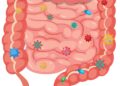
A University of Waterloo team has engineered soil bacteria to invade and devour solid tumors from within — exploiting the very biology that makes cancer so hard to treat.
Cancer has a dirty secret hiding at its core. Deep inside most solid tumors — buried beneath layers of rapidly dividing cells — lies a dark, oxygen-starved wasteland of dead tissue. No blood vessels reach it. Chemotherapy drugs can’t penetrate it. Radiation barely touches it. For decades, this necrotic core has been cancer’s greatest armor.
Now, scientists have figured out how to turn that armor into a weapon against the tumor itself.
Researchers at the University of Waterloo in Ontario, Canada, have engineered a strain of soil bacteria to seek out that oxygen-free core, invade it, and consume it from the inside out — like a microscopic cleanup crew programmed to eat only cancer.
The Bacteria Behind the Breakthrough
The star of this research is Clostridium sporogenes — a bacterium most people have never heard of, but one with a very unusual property: it can only survive in environments completely devoid of oxygen.
That makes solid tumors its ideal home.
The core of a solid, cancerous tumor is comprised of dead cells and is oxygen-free, making it an ideal breeding ground for the bacterium to multiply. Once inside, the bacteria can multiply and begin breaking down and defeating cancerous tissue from the inside out.
In plain terms: the bacteria don’t need to be guided. They naturally seek out and colonize the exact environment that standard cancer treatments struggle most to reach.
“Bacteria spores enter the tumor, finding an environment where there are lots of nutrients and no oxygen, which this organism prefers, and so it starts eating those nutrients and growing in size,” explained Dr. Marc Aucoin, a chemical engineering professor at Waterloo. “So, we are now colonizing that central space, and the bacterium is essentially ridding the body of the tumor.”
The Problem They Had to Solve
The concept sounds almost too good to be true — and for years, it was. Scientists had long known that certain anaerobic bacteria could colonize tumors. The problem was what happened next.
While C. sporogenes thrives deep inside tumors, it cannot survive near the outer edges, where small amounts of oxygen are present. As a result, the bacteria die before they are able to fully destroy the tumor and finish the job.
So the bacteria would invade, start eating the tumor’s core — and then die off before reaching the outer edges where living cancer cells actively divide and spread.
The Waterloo team needed a way to keep the bacteria alive long enough to finish what they started.
The Genetic Engineering Solution
Their solution was elegant — and required two clever tricks working in tandem.
Trick #1: Borrowing an oxygen-resistance gene
To prevent the bacteria dying at tumor edges, the team inserted a gene from another bacterium, Staphylococcus aureus. The agr-QS system transferred from the latter allows the bacteria to survive in oxygenic conditions near the outer regions of the tumor.
But this immediately created a new problem. If the bacteria could suddenly tolerate oxygen, what was stopping them from spreading into the bloodstream or healthy tissues?
Trick #2: A biological timing switch called quorum sensing
This is where the research gets truly ingenious. The team couldn’t simply give the bacteria permanent oxygen resistance — that would be dangerous. So they needed a way to switch on that resistance only at the right place and right time: inside the tumor, once enough bacteria had accumulated to do real damage.
The answer came from nature itself.
Quorum sensing relies on chemical signals released by bacteria. As their numbers increase, the signal grows stronger. Only after enough bacteria have accumulated inside a tumor does the signal reach a level that switches on the oxygen-resistant gene.
Think of it like a democratic vote. The bacteria only “decide” to activate their oxygen resistance once they’ve reached a critical mass inside the tumor — ensuring the switch only flips deep inside cancer tissue, never in the blood or healthy organs.
To confirm the system worked, the team made the engineered bacteria glow green when quorum sensing activated — a visual confirmation that the genetic circuit fired exactly when and where it was supposed to.
“Using synthetic biology, we built something like an electrical circuit, but instead of wires we used pieces of DNA,” said Dr. Brian Ingalls, professor of applied mathematics at Waterloo. “Each piece has its job. When assembled correctly, they form a system that works in a predictable way.”
Why This Approach Is Genuinely Different
Cancer treatments have remained largely unchanged in their fundamental logic for decades: surgery removes tumors; chemotherapy poisons dividing cells; radiation burns them. All three attack cancer from the outside — and all three struggle with the same problem: getting to the tumor’s heavily fortified interior without destroying surrounding healthy tissue in the process.
“Using ‘bugs as drugs’ offers a promising solution to overcome some of the challenges with traditional cancer therapies,” said University of Texas genomic medicine researcher Christopher Johnston. “Solid tumors, which account for the majority of adult cancers, can be notoriously treatment-resistant due to their complex microenvironment. But harnessing the unique abilities of certain microbes may give us a new way to tackle those barriers.”
Bacteria-based therapy doesn’t just tolerate the tumor’s inner environment — it exploits it. The very properties that make solid tumors so treatment-resistant are the same properties that make them a perfect home for Clostridium sporogenes.
Where This Stands Right Now
This research, published in ACS Synthetic Biology, represents a significant proof-of-concept — but it’s still an early step in a long road.
The team has so far demonstrated each piece of the system separately: oxygen resistance in one study, quorum sensing control in a follow-up. The next step is to combine both the oxygen-tolerance gene and the quorum-sensing control system into a single bacterium and test it against tumors in pre-clinical trials.
Safety questions also remain. Scientists must confirm that the bacteria reliably stay confined to tumor tissue, that the body’s immune system doesn’t destroy them before they can do their job, and that they clear the body safely after treatment.
None of these are trivial challenges — but none are insurmountable either.
The Bigger Picture
The idea of using microbes to fight disease is not new. Scientists have explored bacterial cancer therapy for over a century, with early experiments dating back to the 1890s. What makes this moment different is the precision now available through genetic engineering — the ability to program living organisms like software, giving them specific instructions, safety controls, and biological timers.
The engineered bacteria essentially behave like tiny biological machines programmed with clear instructions. First, they travel through the body until they locate the oxygen-poor environment inside a tumor. Next, they begin multiplying in that favorable environment. Once their population grows large enough, their internal communication system activates the genetic circuit that allows them to survive near oxygen-rich areas.
If pre-clinical trials succeed, bacteria-based therapy could eventually offer oncologists a living weapon capable of reaching the parts of tumors that no drug or beam of radiation has ever touched.
Cancer’s greatest armor could become its greatest vulnerability.
Sara Sadr, Bahram Zargar, Marc G. Aucoin, Brian Ingalls. Construction and Functional Characterization of a Heterologous Quorum Sensing Circuit in Clostridium sporogenes. ACS Synthetic Biology, 2025; 14(12): 4857. DOI: 10.1021/acssynbio.5c00628
Scienceable.net covers the latest peer-reviewed science news. This article is based on research published in ACS Synthetic Biology and official press materials from the University of Waterloo.