Every autumn, millions of people roll up their sleeves for the same routine: a flu shot here, a COVID booster there, and a reminder from the doctor about pneumonia vaccines. It’s a cycle that never really ends — because viruses mutate, new strains emerge, and our vaccines constantly need updating.
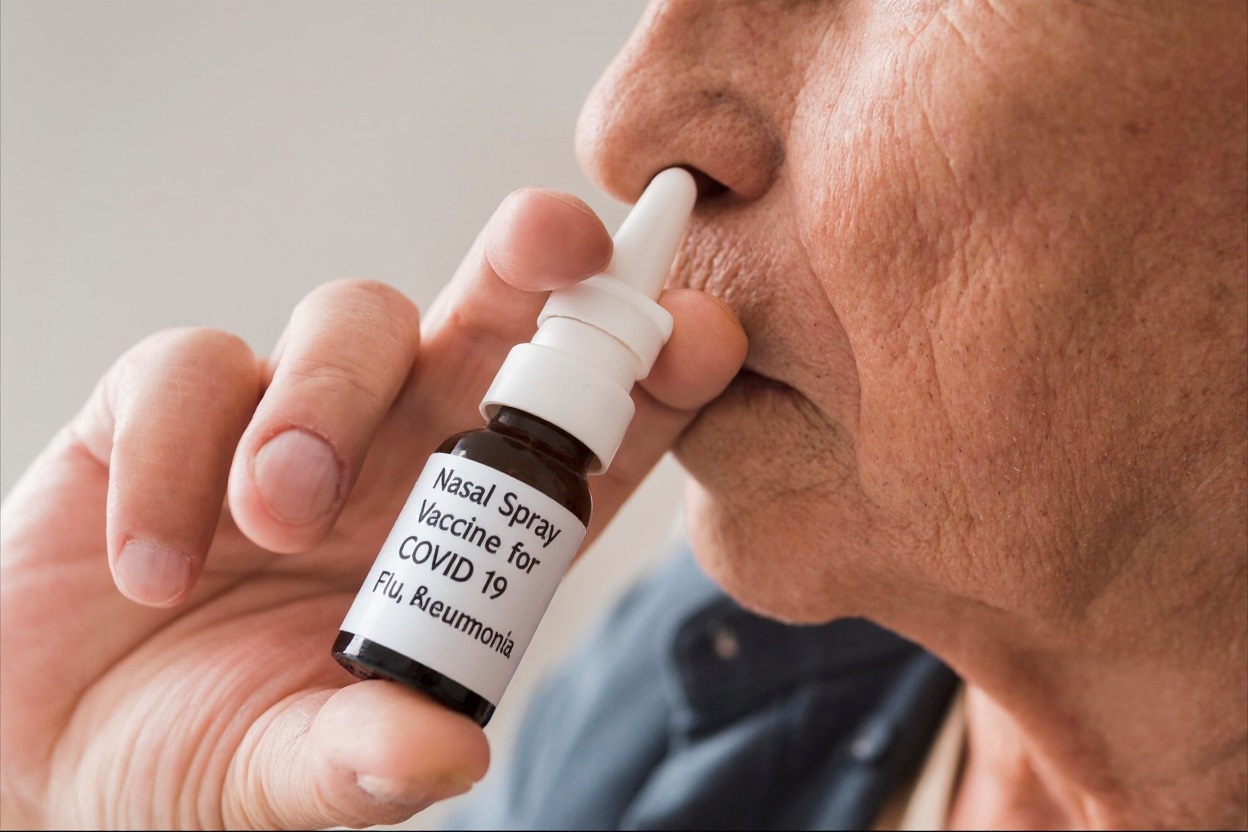
But a landmark new study from Stanford Medicine may have just cracked open a door to something scientists once considered impossible: a single nasal spray that protects against virtually all respiratory threats at once.
What the Research Found
Published on February 19, 2026 in the prestigious journal Science, the study describes an experimental vaccine unlike anything currently in use. Rather than targeting a specific virus or bacterium, this nasal spray works by supercharging the lungs’ own immune defenses — essentially putting them on a permanent state of high alert.
In mouse trials, the results were striking. Vaccinated mice were protected against:
- SARS-CoV-2 and related coronaviruses
- Influenza viruses
- Staphylococcus aureus and Acinetobacter baumannii — two of the most dangerous hospital-acquired bacterial infections
- House dust mites, a leading trigger for asthma and seasonal allergies
That protection lasted for at least three months from a single dose. Unvaccinated mice, by contrast, experienced severe weight loss, dangerous lung inflammation, and in many cases, death.
The numbers are extraordinary: vaccinated mice showed a 700-fold reduction in viral load compared to unvaccinated animals. Even more remarkable, the vaccine appeared to speed up the entire immune response — cutting the time needed to produce virus-fighting T cells and antibodies from two weeks down to just three days.
How It Actually Works — And Why It’s Different
For over 200 years, vaccines have all followed the same basic principle: show the immune system a piece of a pathogen, and it learns to fight the real thing. It’s an elegant system — but it has a critical weakness. Viruses mutate. The flu virus that circulated in autumn may look completely different by spring. A COVID variant can slip past antibodies trained against an earlier strain.
This new vaccine throws out that rulebook entirely.
Instead of mimicking a pathogen, it mimics the chemical signals that immune cells use to communicate with each other during an infection. By delivering those signals directly into the lungs via a nasal spray, the vaccine essentially tricks the immune system into believing an attack is imminent — and keeps it in a state of readiness for months.
The formulation, currently called GLA-3M-052-LS+OVA, uses molecules called Toll-like receptor stimuli — essentially molecular alarm bells — combined with a harmless egg protein (ovalbumin, or OVA) that draws protective T cells into the lung tissue and keeps them there.
“We were interested in this idea because it sounded a bit outrageous,” said lead researcher Dr. Bali Pulendran, Professor of Microbiology and Immunology at Stanford Medicine. “I think nobody was seriously entertaining that something like this could ever be possible.”
The Vision: One Spray for an Entire Respiratory Season
If these results translate to humans, the implications are profound.
Pulendran painted a vivid picture of what that future could look like: “Imagine getting a nasal spray in the fall months that protects you from all respiratory viruses including COVID-19, influenza, respiratory syncytial virus and the common cold, as well as bacterial pneumonia and early spring allergens. That would transform medical practice.”
Beyond routine seasonal protection, researchers note the vaccine could serve as a critical first-response tool during future pandemics — providing broad immune coverage in the critical early weeks before a pathogen-specific vaccine can be developed and distributed.
That alone could save millions of lives.
Important Caveats: It’s Still Early Days
This research is genuinely exciting — but it’s important to be clear about where it stands. These results come exclusively from animal studies. Mouse immune systems, while useful research models, don’t always predict how human immune systems will respond.
There are also practical delivery challenges. In mice, a simple nasal drop was sufficient. In humans, reaching the deeper regions of the lungs may require a nebulizer or a more refined delivery mechanism.
The research team is now planning Phase I clinical trials to evaluate safety in humans. If those trials succeed, larger efficacy studies would follow before any path to public availability.
Dr. Pulendran was careful to note: “Our findings point toward what may be possible in the future, but they are not a substitute for existing vaccines today.”
The Bigger Picture
What makes this research historically significant isn’t just the results — it’s the conceptual shift. For the first time, scientists have demonstrated in a living organism that it may be possible to build immunity not against a specific pathogen, but against the very concept of respiratory infection.
The vaccine doesn’t care whether it’s COVID, flu, RSV, or a new virus that doesn’t have a name yet. It trains the lungs to fight first and ask questions later.
If that principle holds in humans, we may be witnessing the early steps toward a fundamental reimagining of how vaccines work — and how we prepare for the inevitable next pandemic.
📚 Journal Reference: Haibo Zhang et al., Mucosal vaccination in mice provides protection from diverse respiratory threats, Science (2026). DOI: 10.1126/science.aea1260
Scienceable.net covers the latest peer-reviewed science news. This article is based on research published in the journal Science and official press materials from Stanford Medicine.