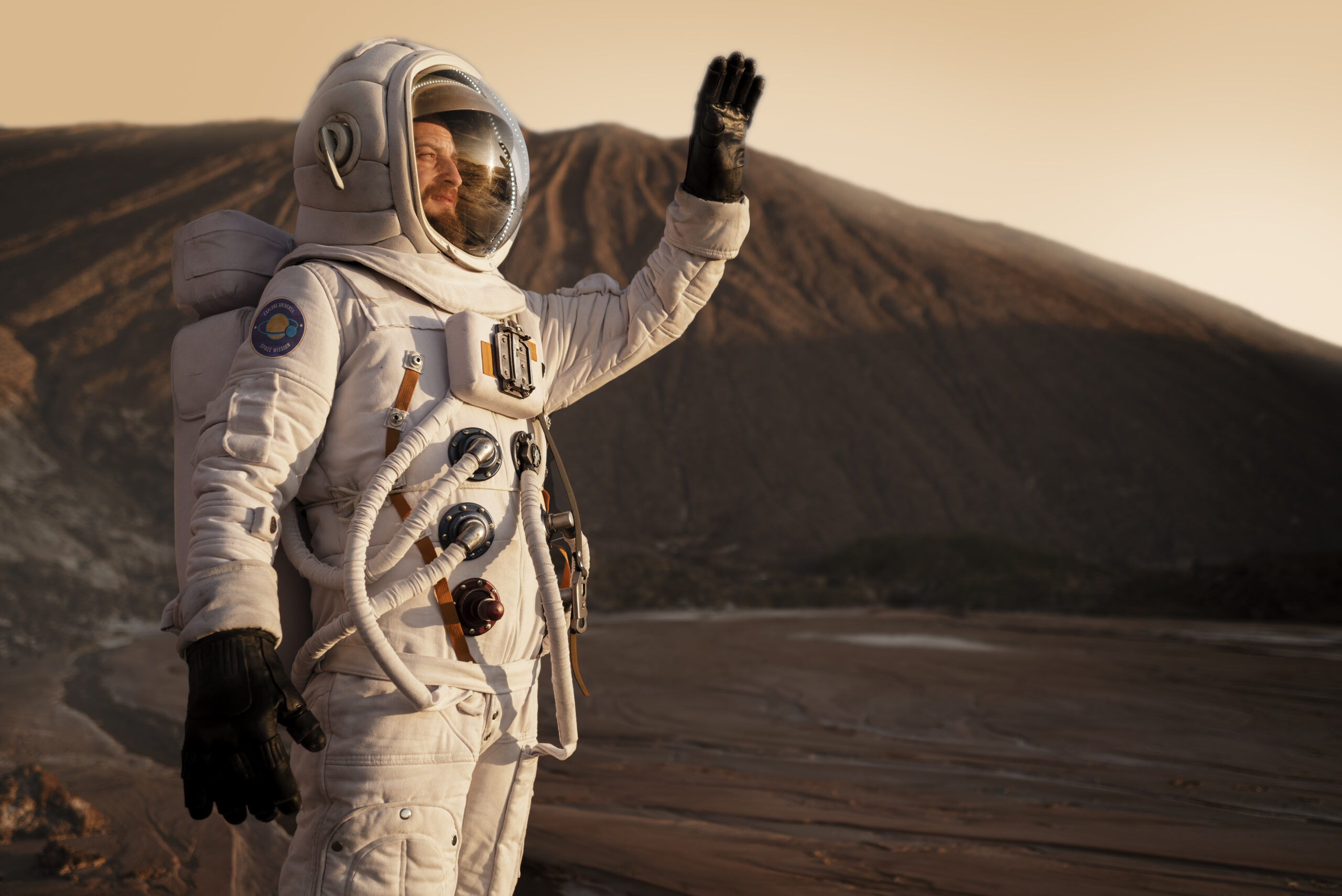
On April 6, 2026, NASA’s Artemis II crew completed a historic seven-hour lunar flyby aboard the Orion spacecraft, passing within just 4,067 miles of the lunar surface and witnessing things that no person had seen in over half a century: an “Earthset” over the Moon’s curved limb, a total solar eclipse viewed from deep space, and the far side of the Moon illuminated in ways that robotic cameras have never been able to capture. The mission marked the triumphant return of humans to the Moon’s neighborhood — and a decisive step toward landing astronauts on its surface.
The Crew That Wrote History
Four astronauts made the journey: NASA Commander Reid Wiseman, Pilot Victor Glover, Mission Specialist Christina Koch, and Canadian Space Agency (CSA) Mission Specialist Jeremy Hansen — the first Canadian astronaut ever to travel to deep space.
The spacecraft — NASA’s Orion capsule mounted atop the Space Launch System (SLS), the most powerful rocket ever to carry humans — lifted off from Launch Pad 39B at Kennedy Space Center in Florida on April 1, 2026, at 6:35 p.m. EDT, beginning a planned 10-day mission that would cover a total distance of 695,081 miles from launch to splashdown.
The mission was not a landing. Artemis II was a critical test flight — an approximately 10-day loop around the Moon designed to prove that Orion and its systems could carry a human crew safely through the deep space environment before those same systems are trusted to put boots on the lunar surface.
A Record-Breaking Journey
The milestones came fast once Orion entered deep space.
At 12:37 a.m. EDT on April 6, the spacecraft crossed into the Moon’s sphere of gravitational influence — the point where the Moon’s gravity overtakes Earth’s. Mission Specialist Christina Koch marked the moment from inside the capsule: “We are now falling to the Moon rather than rising away from Earth. It is an amazing milestone.”
Then, at 1:56 p.m. EDT, the crew broke a record that had stood for 56 years. The Artemis II spacecraft surpassed the farthest distance any human had ever traveled from Earth — a mark set under the most dramatic possible circumstances by the crew of Apollo 13 in April 1970 during their emergency loop around the Moon. Artemis II reached a peak distance of 252,756 miles from Earth, surpassing Apollo 13’s 248,655 miles by more than 4,100 miles.
The Orion spacecraft reached its closest approach to the lunar surface at 7:02 p.m. EDT, coming within 4,067 miles above the Moon — a very different vantage point compared to the Apollo missions, which flew just 70 miles above the surface. But the greater altitude gave the Artemis II crew something the Apollo astronauts never had: the ability to see the entire Moon as a single disc, including regions near both poles.
Seven Hours of Science at the Moon
The lunar flyby observation window ran from approximately 2:45 p.m. to 9:40 p.m. EDT — roughly seven hours during which the crew worked in pairs, photographing and verbally describing about 35 geological features that NASA’s lunar science team had selected for study.
Key targets included:
- Orientale Basin — a 600-mile-wide crater straddling the Moon’s near and far sides, formed by a massive impact roughly 3.8 billion years ago. Under the oblique illumination of the flyby, the dramatic rings of the basin cast long shadows that revealed relief and depth invisible to satellites.
- Hertzsprung Basin — nearly 400 miles wide on the Moon’s far side, it offered a contrasting study in geology. Where Orientale is sharp and fresh, Hertzsprung has been degraded by billions of years of subsequent impacts — a natural record of how lunar features erode over geological time.
- Reiner Gamma — a bright, mysterious swirl pattern on the lunar surface near the equator, whose origin scientists are still investigating.
- Glushko Crater — a 27-mile-wide impact site known for white rays that streak outward from it for up to 500 miles across the surface.
- Potential future landing zones — including a target near the lunar south pole, where NASA hopes to land Artemis astronauts as early as 2028.
The science team in Houston monitored the observations in real time, with lunar science lead Dr. Kelsey Young noting in advance: “We understand what the surface is made of. We understand the topography. But we don’t know what the crew are going to see in these specific illumination conditions from a scientific perspective — and that’s exciting.”
Human eyes are uniquely valuable in this context. Subtle shifts in color and texture that indicate the presence of different minerals — variations too faint for satellite cameras — are exactly the kind of thing a trained astronaut eye can detect and describe. All observation imagery and verbal descriptions were transmitted to Earth for immediate scientific review.
Earthset, Blackout, and a Solar Eclipse Seen from Space
As Orion swung around the Moon’s far side, Mission Control lost contact with the crew at approximately 6:44 p.m. EDT — a planned 40-minute communications blackout caused by the Moon blocking radio signals. During those silent minutes, the crew witnessed “Earthset” — the moment the full globe of Earth slid below the Moon’s curved horizon, vanishing from view entirely. When the Deep Space Network reacquired the signal at 7:25 p.m., the crew reported the stunning counterpart moment: Earthrise — Earth reappearing on the opposite edge of the Moon, echoing the iconic image captured by Apollo 8 astronauts in 1968.
Then came the final spectacle. Between 8:35 and 9:32 p.m. EDT, as Orion, the Moon, and the Sun aligned, the crew witnessed a total solar eclipse — from space. From their vantage point, the Sun disappeared completely behind the darkened Moon for nearly an hour, revealing the solar corona — the wispy outer atmosphere of the Sun — glowing around the lunar edge. The crew also watched for meteoroid impacts on the surface below: brief flashes of light that provide data on potential hazards for future lunar landings.
This was a view that has been seen by fewer than two dozen people in all of human history.
Mission Tests: More Than a Sightseeing Trip
For all its spectacle, Artemis II was foremost a test flight. The crew ran a systematic series of evaluations throughout the mission:
Life support systems — including the spacecraft’s carbon dioxide scrubbers, which remove the CO₂ exhaled by the crew from the cabin air. These were stressed and evaluated under real mission conditions.
Spacesuit testing — the crew donned their Orion Crew Survival System suits during Flight Day 5, performing leak checks, assessing mobility, and testing whether the suits allowed normal activities like eating and drinking — critical checks for future emergencies.
Manual spacecraft control — Pilot Victor Glover practiced manual maneuvering of Orion in proximity operations scenarios that simulate docking with the future Starship lunar landing vehicle.
The deep-space toilet — Artemis II is testing the first waste-management system ever designed for deep space. Commander Wiseman later noted that despite early media skepticism, it was “working fine.”
AVATAR and human health studies — the crew participated in ongoing biological and physiological experiments that will inform how future astronauts’ bodies respond to extended deep space missions.
What Comes Next
The success of Artemis II clears the path for Artemis III — the mission that will actually land humans on the Moon for the first time since Apollo 17 in December 1972. Using SpaceX’s Starship as the lunar landing vehicle, Artemis III aims to set down near the lunar south pole, where permanently shadowed craters are believed to hold deposits of water ice — a resource that could support future long-duration missions and even a permanent human presence.
Beyond the Moon, NASA’s long-term vision positions every Artemis mission as a stepping stone toward Mars. The deep space systems, medical protocols, life support technologies, and navigation techniques tested aboard Artemis II are designed to scale to the far longer and more challenging journey to the Red Planet.
For now, four astronauts splashed down safely in the Pacific Ocean, completing a journey of nearly 700,000 miles. The Moon had felt close enough to touch.
Key Mission Facts at a Glance
| Detail | Data |
|---|---|
| Launch Date | April 1, 2026, 6:35 p.m. EDT |
| Crew | Reid Wiseman, Victor Glover, Christina Koch, Jeremy Hansen |
| Rocket | NASA SLS (Space Launch System) |
| Spacecraft | Orion |
| Mission Duration | ~10 days |
| Total Distance | 695,081 miles |
| Closest Lunar Approach | 4,067 miles above surface |
| Maximum Distance from Earth | 252,756 miles (new human spaceflight record) |
| Previous Record Holder | Apollo 13, April 1970 — 248,655 miles |
| Lunar Flyby Duration | ~7 hours (2:45 p.m. – 9:40 p.m. EDT, April 6) |
| Splashdown Location | Pacific Ocean, off coast of San Diego |
Source.
- NASA Official Mission Page: nasa.gov/mission/artemis-ii
- NASA Launch Announcement: Liftoff! NASA Launches Astronauts on Historic Artemis Moon Mission
- NASA Flight Day 6 — Lunar Flyby Updates (Live Blog): nasa.gov/blogs/missions/2026/04/06/artemis-ii-flight-day-6-lunar-flyby-updates
- NASA Flight Day 6 — Crew Ready for Lunar Flyby: nasa.gov/blogs/missions/2026/04/06/artemis-ii-flight-day-6-crew-ready-for-lunar-flyby
- NASA Lunar Flyby Image Gallery: nasa.gov/gallery/lunar-flyby
- NASA FAQ — Artemis II Questions: nasa.gov/missions/nasa-answers-your-most-pressing-artemis-ii-questions
- NPR Coverage — Artemis II Heads Home After Historic Moon Flyby: npr.org/2026/04/06/nx-s1-5773187/nasa-artemis-ii-moon-lunar-flyby
- CNN Coverage — Artemis II Moon Mission: cnn.com/2026/04/03/science/artemis-2-astronauts-moon-whats-next
Scienceable.net covers the latest developments in space exploration, astronomy, and science. For updates on the Artemis program, follow our Space & Astronomy section.